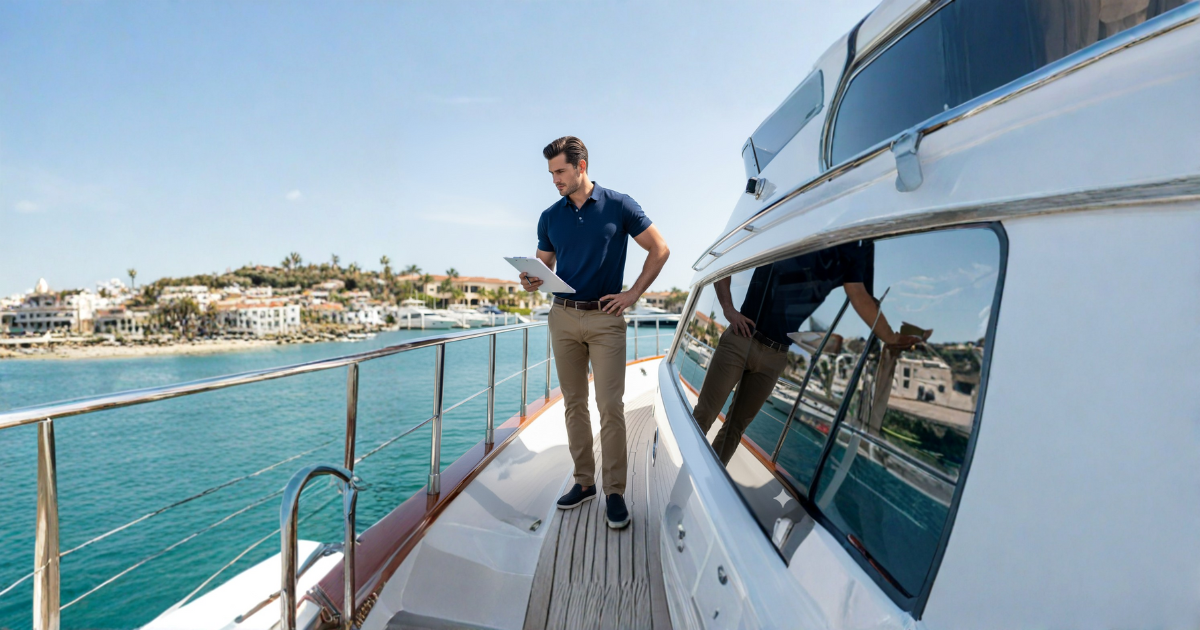
If you’ve found a boat in Greece that looks promising, the next step is to confirm its condition with a professional survey. But how long does a boat survey in Greece actually take—and what should you expect during the process?
Here’s a breakdown of the typical timeline, what’s included, and how to make sure your survey goes smoothly.
Typical Timeline: Half-Day vs. Multi-Day Surveys
The length of a boat survey in Greece depends on the vessel size, location, and the depth of inspection required.
- Smaller sailboats (30–38 ft): Most surveys take about half a day, including a short haul-out for hull inspection.
- Mid-sized yachts (40–50 ft): Usually a full day, as there can be more systems, rigging, and interior details.
- Larger vessels (50 ft+ or complex systems): Can take over a day.
In Greece, surveys often start early in the morning, with the haul-out arranged first. The surveyor may need extra time if moisture readings, engine testing, or documentation reviews uncover issues.
While it’s tempting to think of surveys as quick checkups, remember they’re thorough technical inspections—and rushing can lead to missed problems.
What’s Included in the Process
A professional marine survey in Greece typically covers:
- Hull & deck inspection (moisture testing, delamination checks, osmosis detection)
- Rigging & spars (visible corrosion, fatigue, and service history)
- Engine & mechanical systems (visual inspection, operational testing if possible)
- Electrical & plumbing systems (functionality, corrosion, safety compliance)
- Interior & safety gear (structural integrity, bilge condition, fire safety, life-saving equipment)
- Documentation review (ownership, VAT status, builder’s certificates, CE compliance)
At the end, the surveyor provides a written report—usually within 2–5 business days—summarizing findings, sometimes estimating repair costs, and recommendations.
Buyer’s Role During the Survey
Buyers are encouraged to attend the survey if possible. It’s an invaluable chance to:
- See the inspection process firsthand.
- Ask questions about findings or maintenance priorities.
- Get informal advice from the surveyor before the final report arrives.
- Get to know the boat more intimately.
If you can’t attend, you can request photos or videos of key areas (especially the hull, keel, and rigging). Most surveyors are happy to accommodate remote buyers.
Remember: the surveyor works for you, not the seller or broker. Their job is to give an independent opinion of the boat’s real condition.
How the First Look Fits in Before a Full Survey
Many buyers now start with a First Look inspection before booking a survey. For €299, a Clearhull First Mate?A Clearhull First Mate is an experienced sailor who visits the boat on your behalf, taking detailed, unbiased photos and filling out a 105-point structured checklist. Book Your First Mate Here visits the boat, takes photos and videos, and goes through a 105-point checklist.
This pre-survey step helps you:
- Filter out boats that aren’t worth surveying.
- Save €500+ in travel expenses on poor candidates.
- Focus your survey budget on boats that pass an initial quality check.
You can learn more about how this works in our First Look Inspection in Greece: Save €500+ Before You Travel guide.
Once a boat passes the First Look stage, booking a survey becomes much more efficient—both logistically and financially.
Final Thoughts
Boat surveys in Greece are detailed, hands-on evaluations that take anywhere from half a day to a couple of days, depending on size and complexity. They’re essential for understanding the true condition of a boat before purchase.
By pairing a First Look inspection with a professional survey, you’ll eliminate wasted trips, reduce surprises, and make confident decisions about your investment.
👉 Book a First Look inspection in Greece today and start your buying process the smart way.
Related Articles
Marine Survey vs. First Look Inspection in Greece: What’s the Difference?
Confused between a marine survey and a First Look inspection in Greece? Learn how they differ in scope, cost, and purpose—and when to use each for smarter boat buying.
Do I Need a Boat Survey in Greece? (2026 Buyer’s Answer)
Wondering if you need a boat survey in Greece? Learn when a survey is essential, when a First Look inspection may be enough, and what survey results usually reveal.
Best Places to Buy Used Boats in Greece (Athens & Islands, 2026 Guide)
Looking for the best place to buy used boats in Greece? This 2026 guide covers Athens, Lefkas, Preveza, Kos, Rhodes, Corfu, and the top online platforms for boat buyers.